
Winter's Silent Threat: Ice Damage on Concrete in Chicago
- Kolmena Contractor

- May 4
- 3 min read
Understanding Ice Damage on Concrete Structures
Winter in Chicago is harsh, and it doesn't just affect our roofs. The silent enemy of your concrete structures—driveways, garages, patios, and foundations—is the freeze-thaw cycle. A small crack can become a major fissure, compromising your property's safety and value. This article will explain exactly how ice destroys concrete, what preventative measures you can take, and when it’s time to call a professional for ice-damaged concrete repair in Chicago.
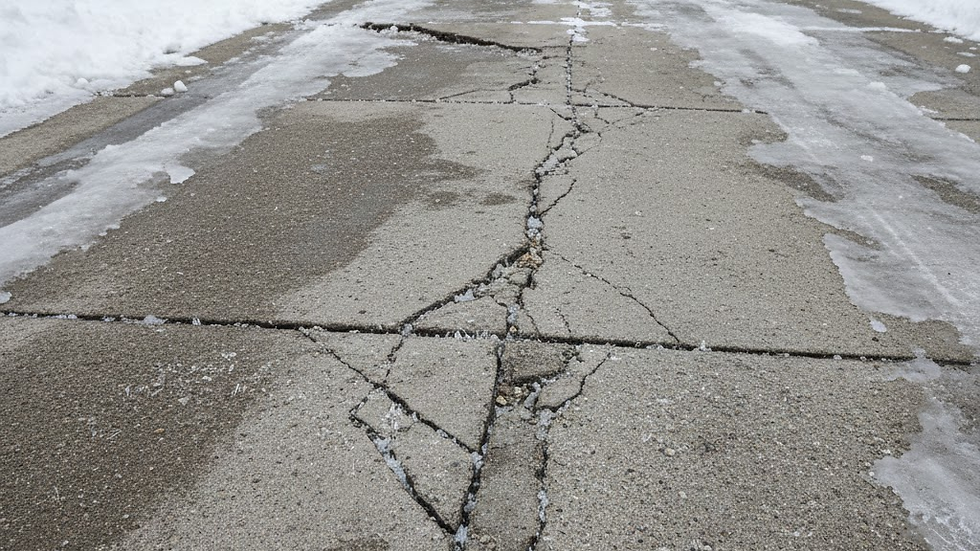
How Does Ice Destroy Concrete? (The Cryogenic Stress)
The secret behind the damage lies in the physics of water:
Absorption: Concrete is a porous material that absorbs moisture from snow, rain, and melted ice.
Expansion: When that absorbed water freezes (at sub-zero temperatures), it expands up to 9% of its original volume.
Internal Damage: This expansion exerts immense internal pressure within the pores and fissures of the concrete, forcing them to open up and widen. This phenomenon is known as cryogenic stress.
Result: With every freeze-thaw cycle, the damage worsens, resulting in spalling, deep cracks, and surface deterioration.
Signs Your Concrete Needs Urgent Attention
If you observe any of these issues, your concrete is at risk, and you may need Ice Damaged Concrete Repair Chicago:
Spalling (Scaling): The top layer of the concrete is flaking or peeling off.
Deep and Wide Cracks: Fissures are spreading across large sections or are wider than 1/4 inch.
Settlement: One section of the driveway or patio is visibly lower than adjacent sections.

Your Winter Prevention Plan (DIY)
If your concrete is in good condition, prevention is the best defense against ice:
Annual Sealing: Apply a high-quality, penetrating sealer before winter. The sealer drastically reduces the porosity of the concrete, minimizing the amount of water it can absorb.
Use Salt Wisely: Avoid using products containing ammonium sulfate or ammonium nitrate, as they corrode concrete. Use only sodium chloride (rock salt) sparingly, and remove excess as soon as the ice melts.
Improve Drainage: Ensure water does not pool near your garage or foundation. Proper drainage directs water away from the concrete.
Professional Solution: Why Concrete Repair is Vital
Once ice damage is structural, home remedies are not enough. Kolmena Construction specializes in restoring and protecting your concrete structures:
Replacement or Resurfacing: For surface damage (spalling), we can apply a resurfacing coat. For structural damage, total replacement of the affected section is necessary.
Tuckpointing and Brick Repair: Don't forget the walls. The same cryogenic stress that damages your concrete also harms the mortar between your bricks. If you notice crumbling mortar, you need professional tuckpointing to seal your wall.
Warranty Against Illinois Weather: We use only low water-to-cement ratio concrete mixtures and air-entrainment admixtures to ensure your new structures last for decades, resisting Chicago's freeze-thaw cycles.
Kolmena Expert Advice: A Shield Against Chicago's Weather
As Chicago construction experts, our final advice is clear: prevention is the only sustainable strategy against cryogenic stress. Given the high frequency of freeze-thaw cycles in our area and the inevitable use of chloride salts on our roads, your concrete is under constant chemical and physical attack. Don't wait for a small crack to turn into an emergency. Ensure your concrete has been professionally sealed with an industrial-grade product, as this is the only reliable "shield" your property can have to avoid costly ice damaged concrete repair next year.
Conclusion: Protecting Your Concrete This Winter
Don't let winter ruin your property. If you are looking for experts in Ice Damaged Concrete Repair in Chicago, contact us today for a free inspection.


Comments